
For decades, designers have searched for materials that possess both sustainability and biological intelligence. Now, a research team at the Shenzhen Institutes of Advanced Technology has advanced this field through the creation of a living mycelium textile.
Published in Science Advances, their work introduces us to a responsive material capable of self-renewal, surface repair, and functional adaptation. The said innovation belongs to the broader class of engineered living materials, where biological organisms remain functional long after product fabrication.
How Does a Living Mycelium Textile Restore Its Own Structure?
Not like traditional bio-materials that are dried and rendered biologically inactive, this advanced science process keeps the fungus Cordyceps militaris alive in a low-metabolic state. The sheets retain latent vitality by going through a process: cultivating dense hyphal pellets in liquid culture -> treating them with glycerol as a plasticiser -> drying them at forty-five degrees Celsius.
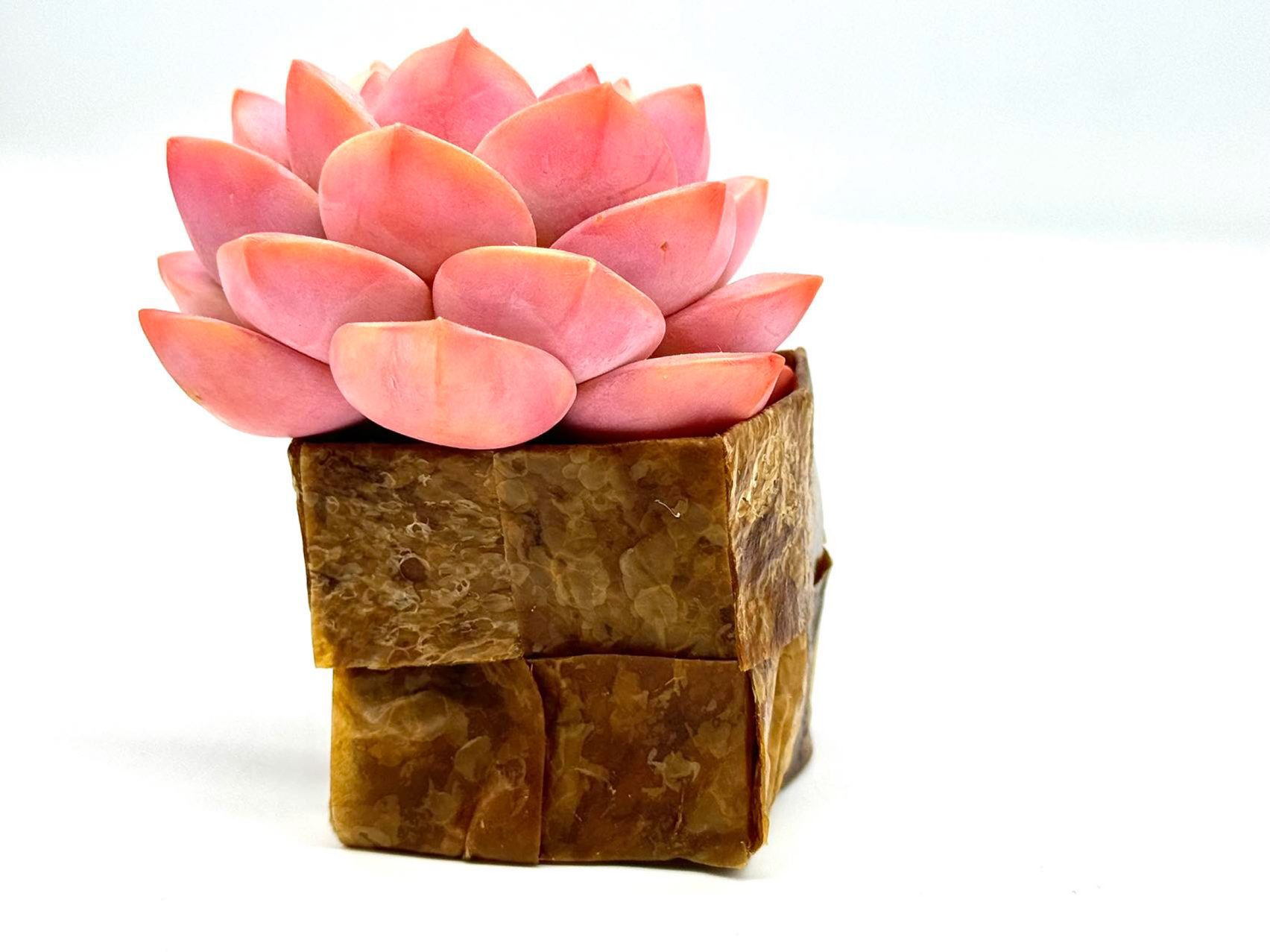
When physical damage occurs, applying a nutrient solution derived from potato water alongside fresh fungal culture reactivates the dormant cells. The growing filaments naturally bridge damaged gaps without stitching or adhesives, creating a functional self-repairing fabric.
Additionally, the surface repels water due to inherent hydrophobic properties that deliver natural self-cleaning performance. This excellent ability to regenerate lets the living mycelium textile to continuously renew its outer surface during use.
Custom Properties Through Biological Adaptation
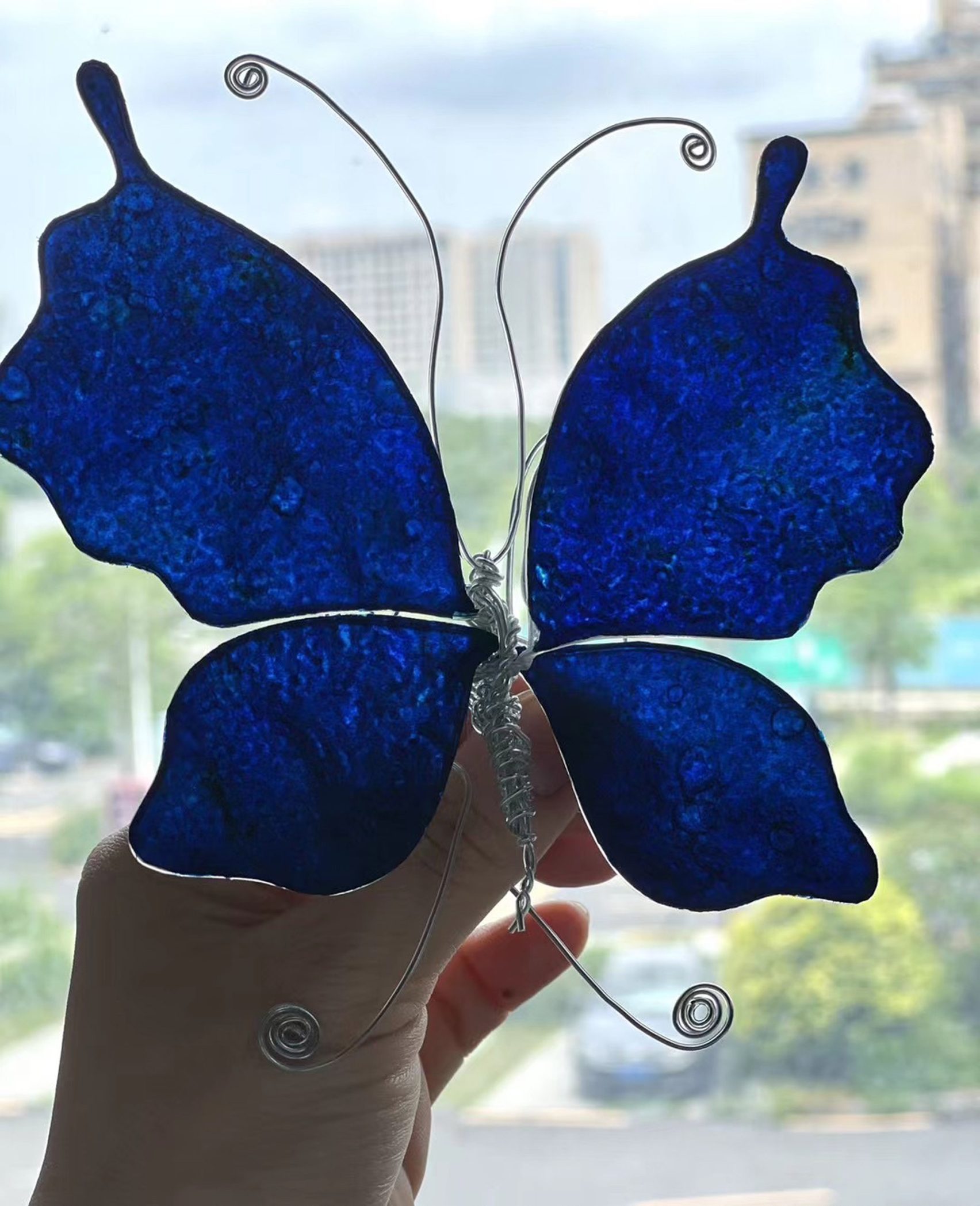
The researchers designed the material as a modular biological platform. They let various yeasts and fungi integrate during cultivation. Brewer yeast introduces natural blue pigmentation throughout the fungal matrix, while Aspergillus niger secretes melanin to protect against ultraviolet radiation. Because these traits occur through natural co-culturing rather than genetic modification, designers can tailor material behaviour for specific applications.
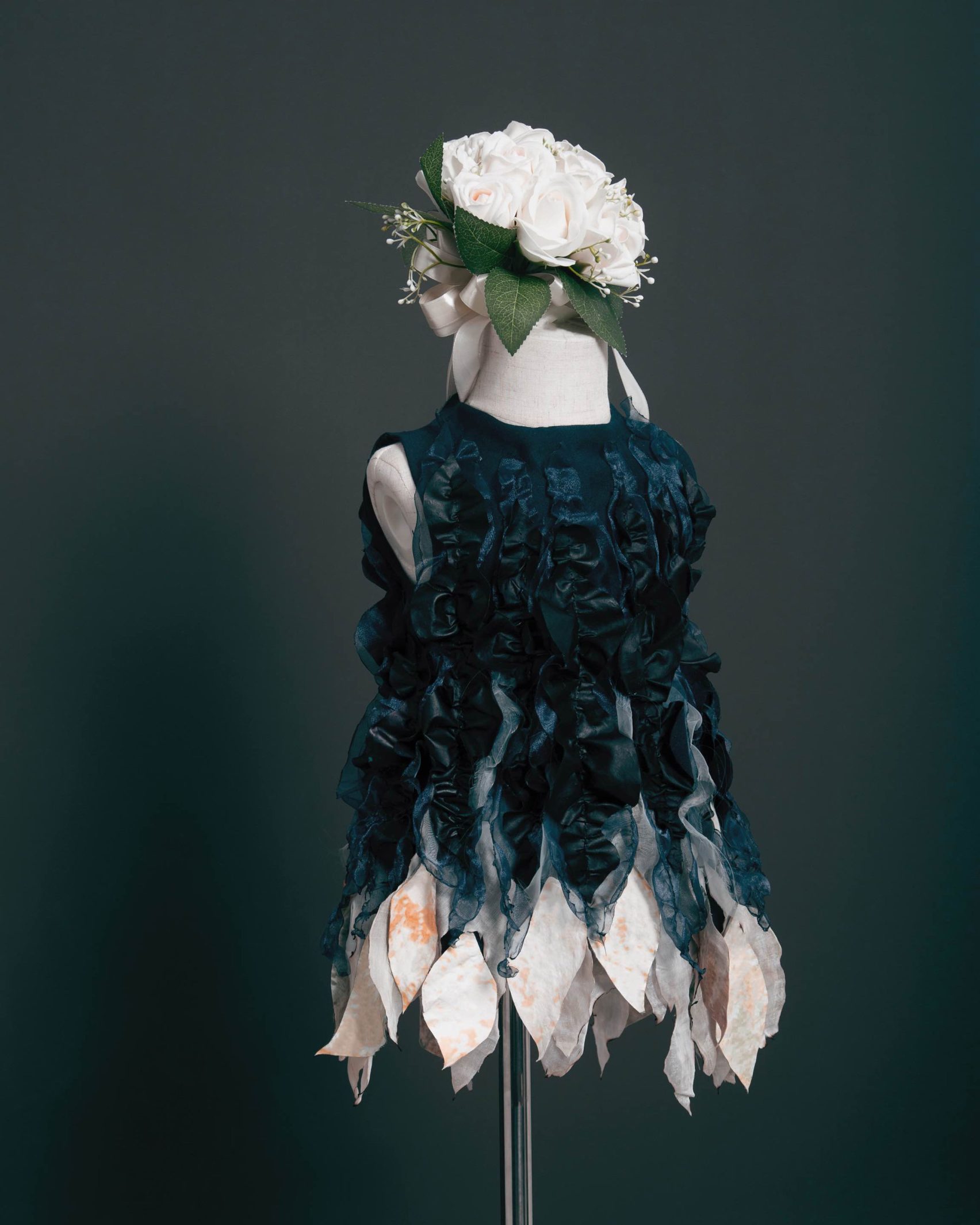
A conceptual dress developed with Berlin material studio Peelshere shows a blue body, self-cleaning hem, and patterned collar. This garment highlights how a modular biological platform can generate distinct visual patterns and functional zones across a single object. The versatile self-repairing fabric demonstrates how biological growth can replace conventional synthetic chemical treatments.
Commercial Potential and Development Challenges
Beyond garment design, potential uses include exhibition installations, decorative interior surfaces, and biodegradable packaging solutions. Environmental testing also shows that the underlying fungal structure completely decomposes in soil within forty-one days, supporting circular manufacturing models.
However, before broad commercial adoption occurs, it is important to resolve key technical challenges about the shelf life, atmospheric moisture resistance, and biological contamination control. Many independent evaluations say that further testing is necessary to prove long-term durability compared to standard woven fabrics. Until manufacturing stability improves, the living mycelium textile represents a major step toward materials that adapt alongside their surrounding environments.
Also Read: Pipal – a slow fashion label with something to say.