
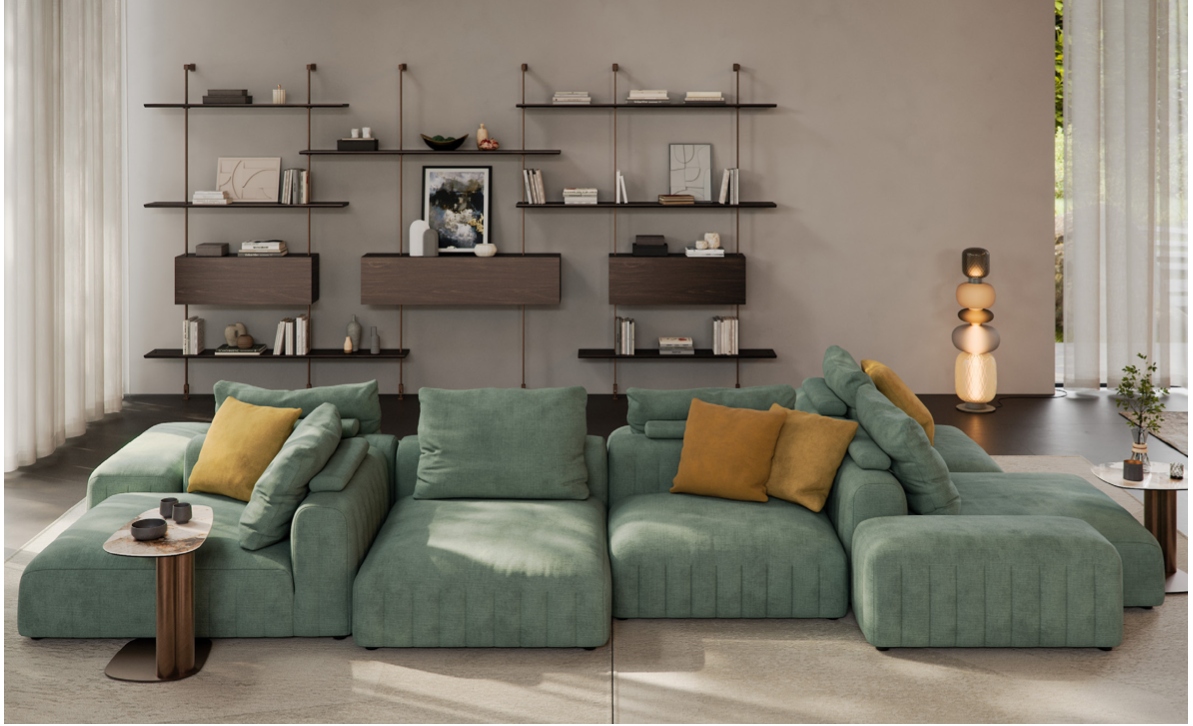
Sergio Bicego built the Gibson modular sofa around a simple refusal, the idea that a sofa needs a front and a back. Made from independent upholstered volumes, the system lets seats, backrests and armrests move freely within whatever space they’re placed in, so the usual hierarchy of a sofa’s design falls away. An armrest can become a backrest and a seat can stretch into a chaise longue once the right module joins it. Gibson doesn’t insist on staying put, and that alone sets it apart from most modular systems, which typically offer variation only within fairly rigid boundaries.
Gibson Modular Sofa: Rethinking Flexible Seating
That flexibility makes it as comfortable in a home as it is in commercial settings, where reconfigurability matters more than aesthetics alone. Hotel lobbies, retail floors, hybrid offices and shared workspaces all benefit from furniture that can define zones without walls, and Gibson does exactly that, arranging itself into islands that shift with whatever the room needs that day. A lounge area can turn into a reception layout by evening, without anyone touching a wall or moving a partition, simply by repositioning the modules themselves.
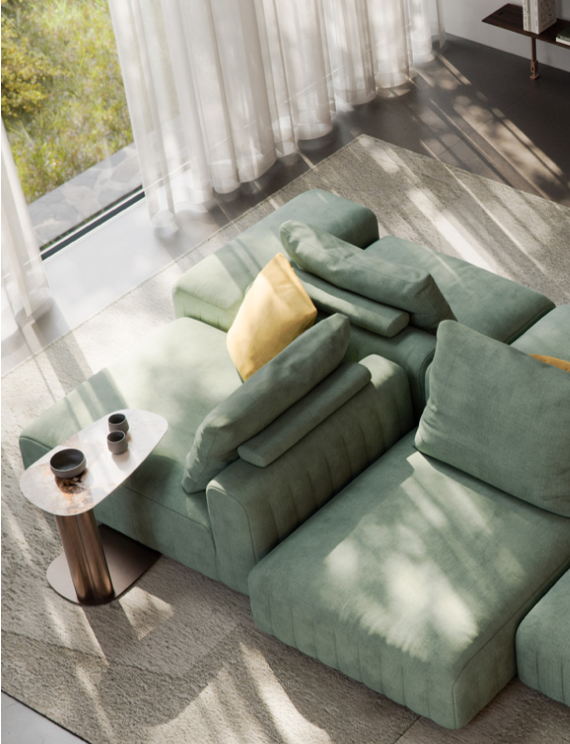
The name comes from music, and the reference holds up better than most furniture naming conventions tend to. Bicego treats the individual modules the way a composer treats notes on a page, open to combination, open to rearrangement, built to form new configurations without ever repeating the same one twice. It is a fitting metaphor for a system this unfixed, and one that plays out physically in how the pieces connect and separate.
Comfort Meets Adaptability
Comfort remains central despite all the structural flexibility. Deep seating modules carry rounded edges and quilted detailing that draws attention to the polyurethane padding underneath, giving Gibson a tactile quality that matches its visual softness. A ceramic coffee table module rounds out the system, while loose cushions, available across Cattelan Italia’s full fabric range, let owners either contrast the palette or work within a single tonal family for something quieter. Between the two options, the sofa can shift from a bold statement piece to something that recedes comfortably into the background.
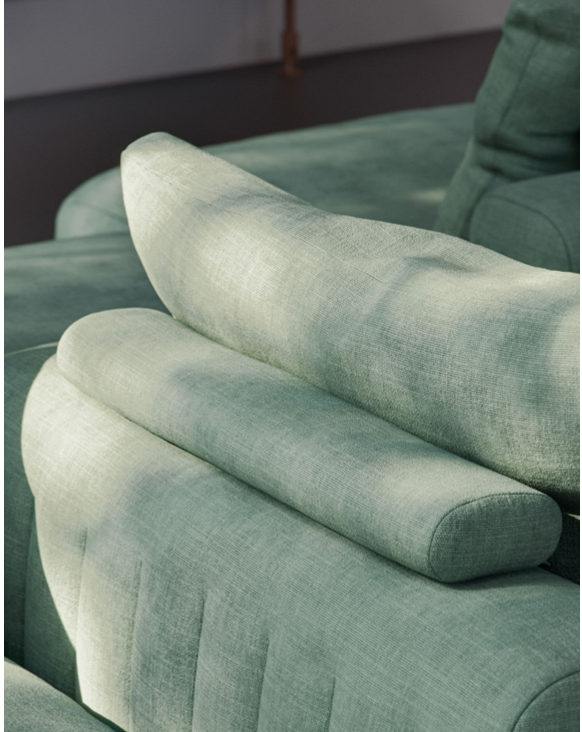
Gibson sits at the intersection of furniture design and interior architecture, built specifically to change as a space changes. Each module can be repositioned independently, so the sofa adapts rather than gets replaced, staying useful through whatever shifts a room goes through over the years. Like the music that inspired its name, Gibson keeps orchestrating a conversation between solid and empty, weight and ease, that never quite resolves into one fixed arrangement.
Also Read: Moroso Venice, design takes it place at Terraza Biennale.