
Fourteen kilometers from Puri, the map ends, and a living museum begins. In most of the world, art is something you visit, a destination enclosed within museum walls or framed in silent galleries. But in Raghurajpur, a hamlet tucked into the coconut groves just 14 kilometers from Puri, art is the atmosphere itself. Here, on the banks of the Bhargavi River, creativity is a profession, but at its core, it is the rhythm of daily life.
As India’s first designated Heritage Crafts Village, Raghurajpur defies the modern impulse for mass production. Walking its two narrow main streets feels less like tourism and more like stepping into an open-air atelier. The village itself is the masterpiece. Every veranda is a gallery; every outer wall is a mural. Facades bloom with intricate scenes of Krishna, episodes from the Ramayana, and floral motifs that seem to grow organically from the plaster.
Soul of Raghurajpur : The Pattachitra Legacy
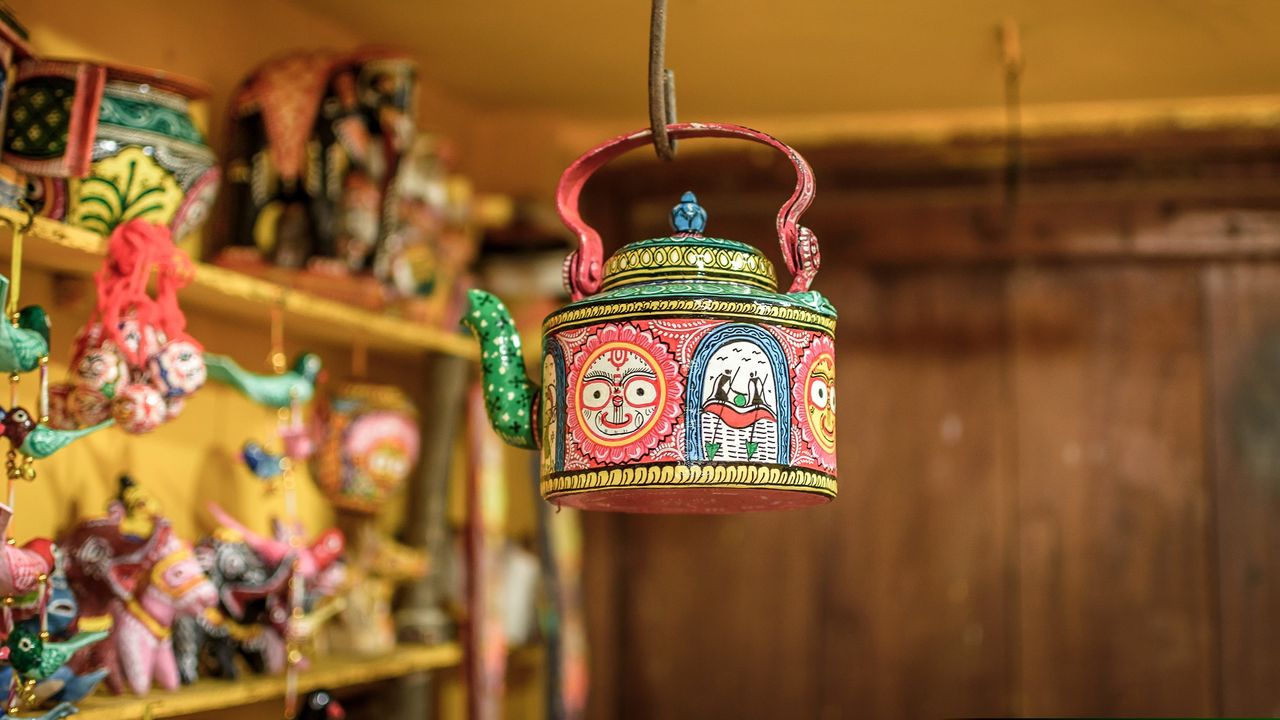
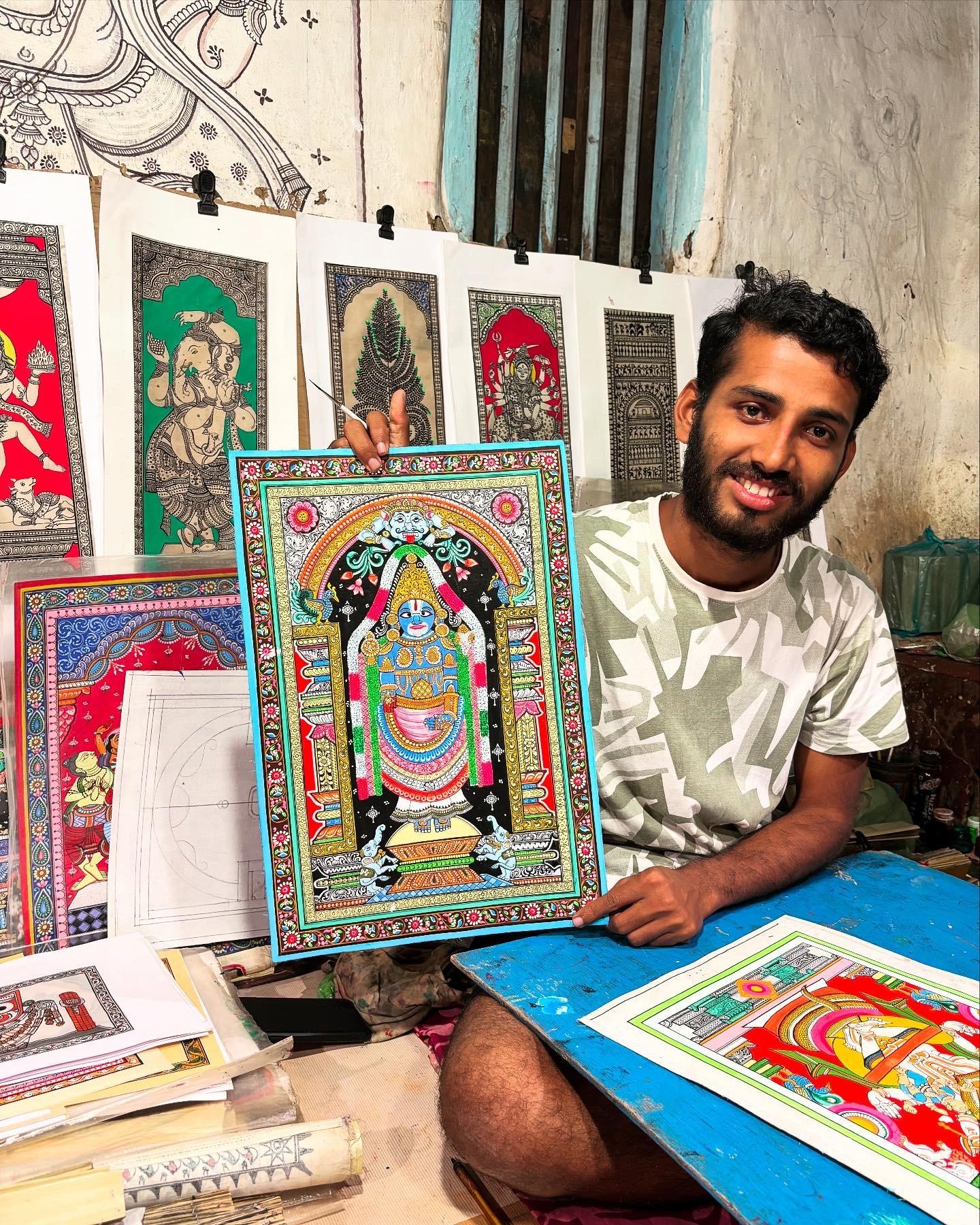
The soul of Raghurajpur is Pattachitra, a cloth-based scroll painting tradition that spans over a millennium. The process is a living proof of patience in an age of haste. Artisans prepare their canvas by layering old cotton with tamarind seed gum and chalk, polishing it until it resembles ivory. There are no synthetic shortcuts here. Brushes are crafted from animal hair; pigments are ground from stones, crushed shells, and burnt lamp soot. When you watch an artist work, you are witnessing a lineage of technique that has refused to dilute itself.
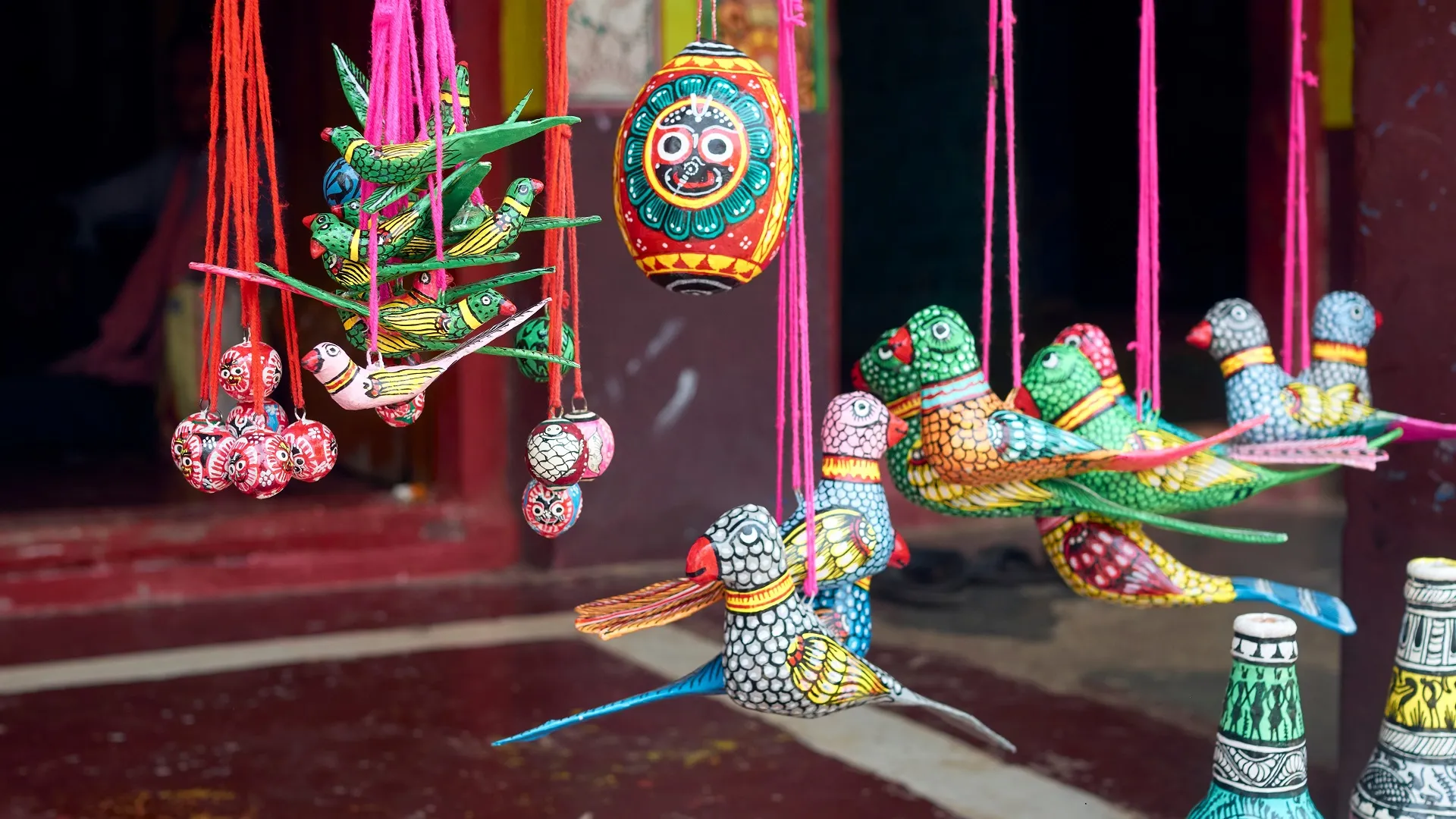
While Pattachitra is the headliner, the village’s artistic vocabulary is vast. Pause at a doorway, and you might find a family engraving microscopic poetry onto dried palm leaves (Talapatra), or shaping sustainable toys from cow dung and papier-mâché. Wood is carved, stone is chiseled, and Tussar silk is transformed into storytelling drapes.
In these homes, art is a generational dialogue. Grandparents sit beside grandchildren, passing down not just skills, but the stories that the art depicts. It is a rare, thriving ecosystem where the “studio” is simply the living room floor, and the “artist” is every single member of the household.
Rhythm and Movement
The artistry here isn’t strictly visual. Raghurajpur is also the cradle of Gotipua, the acrobatic precursor to the classical Odissi dance. Performed by young boys dressed as women, the dance is a physical echo of the paintings, graceful, disciplined, and deeply spiritual. On festival days, the village air fills with the percussive thrum of mardala drums, adding a sonic layer to the visual feast.
In a world obsessed with the ‘new,’ Raghurajpur offers the radical luxury of the ‘timeless.’ The hospitality here is uncurated and genuine. Artisans invite you in not just to sell, but to show. They explain the mythology behind a motif or the geology behind a pigment color.
To visit Raghurajpur is to be reminded that culture is not a static thing to be preserved in glass cases. It is alive, breathing, and painting its own story, one brushstroke at a time. For the lifestyle traveler seeking authenticity this January, this quiet village offers something profound: the realization that a life lived in art is the most beautiful masterpiece of all.
Read Also: Shakti awakens Meena Sansanwal exhibition.